
The My Son Sanctuary: A Mysterious Journey to the Heart of the Kingdom of Champa
While Hoi An charms visitors with its colorful lanterns, My Son captivates them with the mysterious beauty of its red-brick temples, which reflect the light of the setting sun. This exceptional archaeological site, a testament to Vietnam’s rich and enigmatic history, transports you to the distant past of the Champa Kingdom. Immerse yourself in a unique culture influenced by Hinduism and marvel at splendid architectural monuments, often compared to the temples of Angkor in Cambodia. Mỹ Sơn is a treasure unlike any other in Southeast Asia.
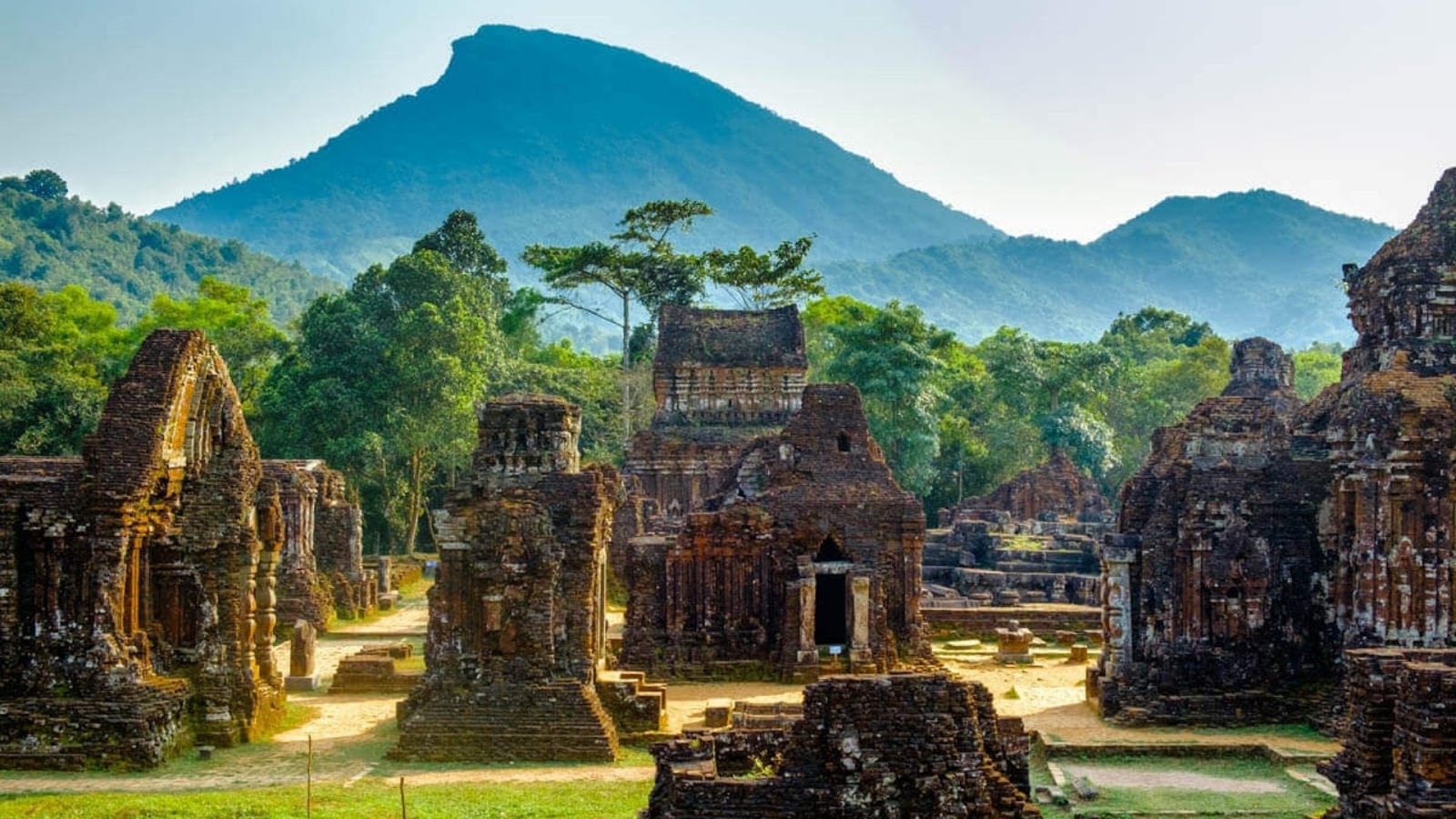
Where is the Mỹ Sơn Sanctuary located?
The Mỹ Sơn site is located in Duy Phú Commune, Duy Xuyên District, Quảng Nam Province. It lies about 35 km from Hội An and 50 km from Đà Nẵng, near the ancient Cham capital of Trà Kiệu. Nestled in a narrow valley surrounded by mountains, the sanctuary comprises some 70 Cham temples—a true masterpiece of ancient architecture.
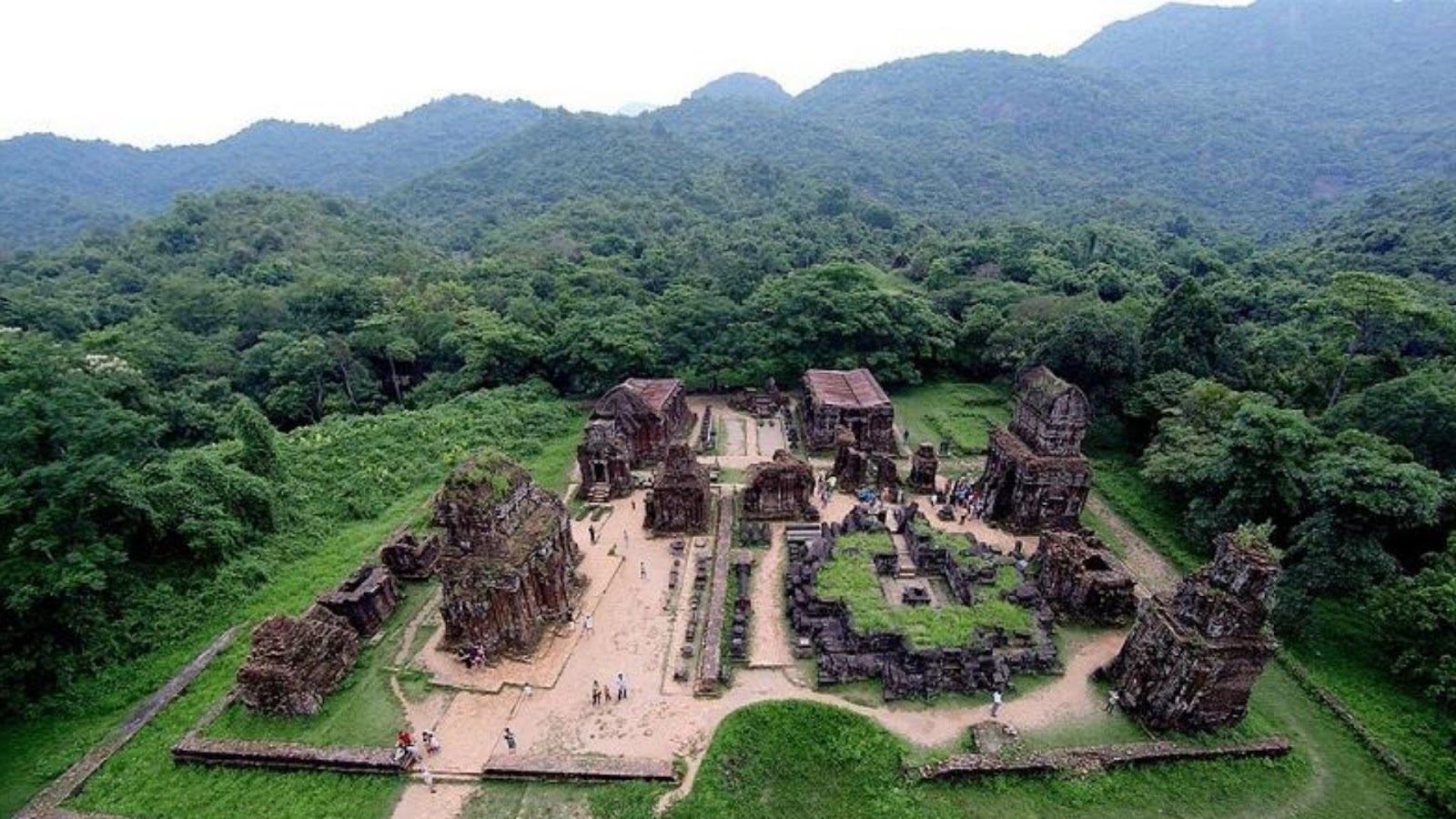
When to visit Mỹ Sơn?
For the best experience, plan your visit to Mỹ Sơn during Vietnam’s milder seasons. Spring (February through April) and fall (August through October) are ideal, offering pleasant temperatures and light rainfall.
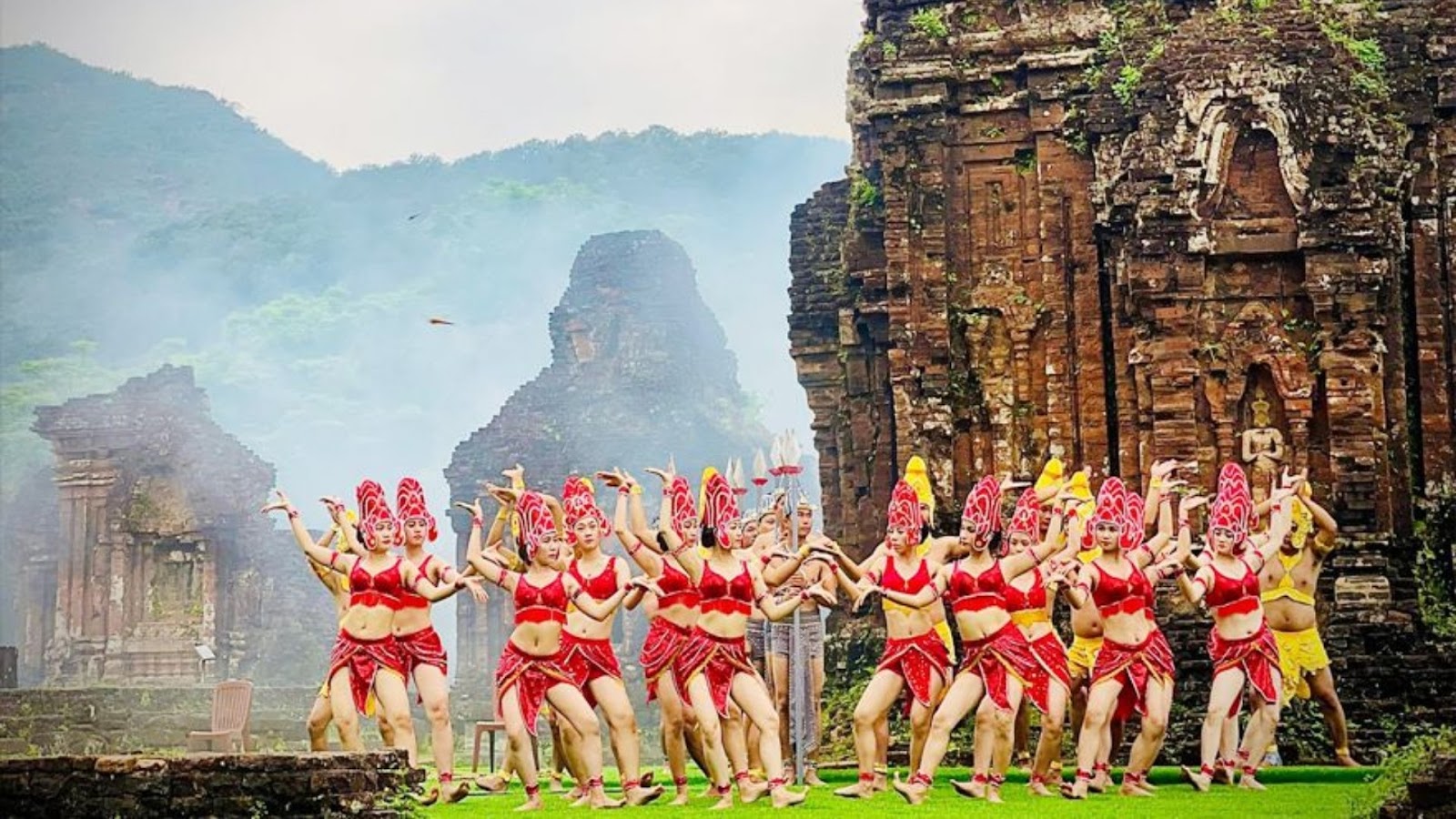
If you’d like to explore the site in a more peaceful atmosphere, without the crowds from organized tours, we recommend arriving as early as 6:30 a.m. Afternoons can be hotter, and the walk more challenging.
How to visit the My Son Sanctuary?
My Son is easily accessible from Hoi An (37 km). A visit typically takes a few hours, so it’s best to set out in the morning. Several options are available:
- Private vehicle with driver and guide: This is the most comfortable and rewarding option. We can organize your entire tour, complete with an English-speaking guide who will shed light on the site’s fascinating history. All you have to do is sit back and enjoy the tour—we’ll pick you up at your hotel.
- Local tour operators: Many agencies offer bus tours from Hội An. Check with your accommodation and compare the offers. The downside is often a lack of flexibility.
- Scooter rental: For total freedom and budget control, renting a scooter is a great option. Be sure to bring a GPS or navigation app, as road signs aren’t always present until you arrive at your destination. The trip takes about 1 hour and 30 minutes from Hội An. Don’t forget to bring glasses to protect against the dust!
Once you arrive:
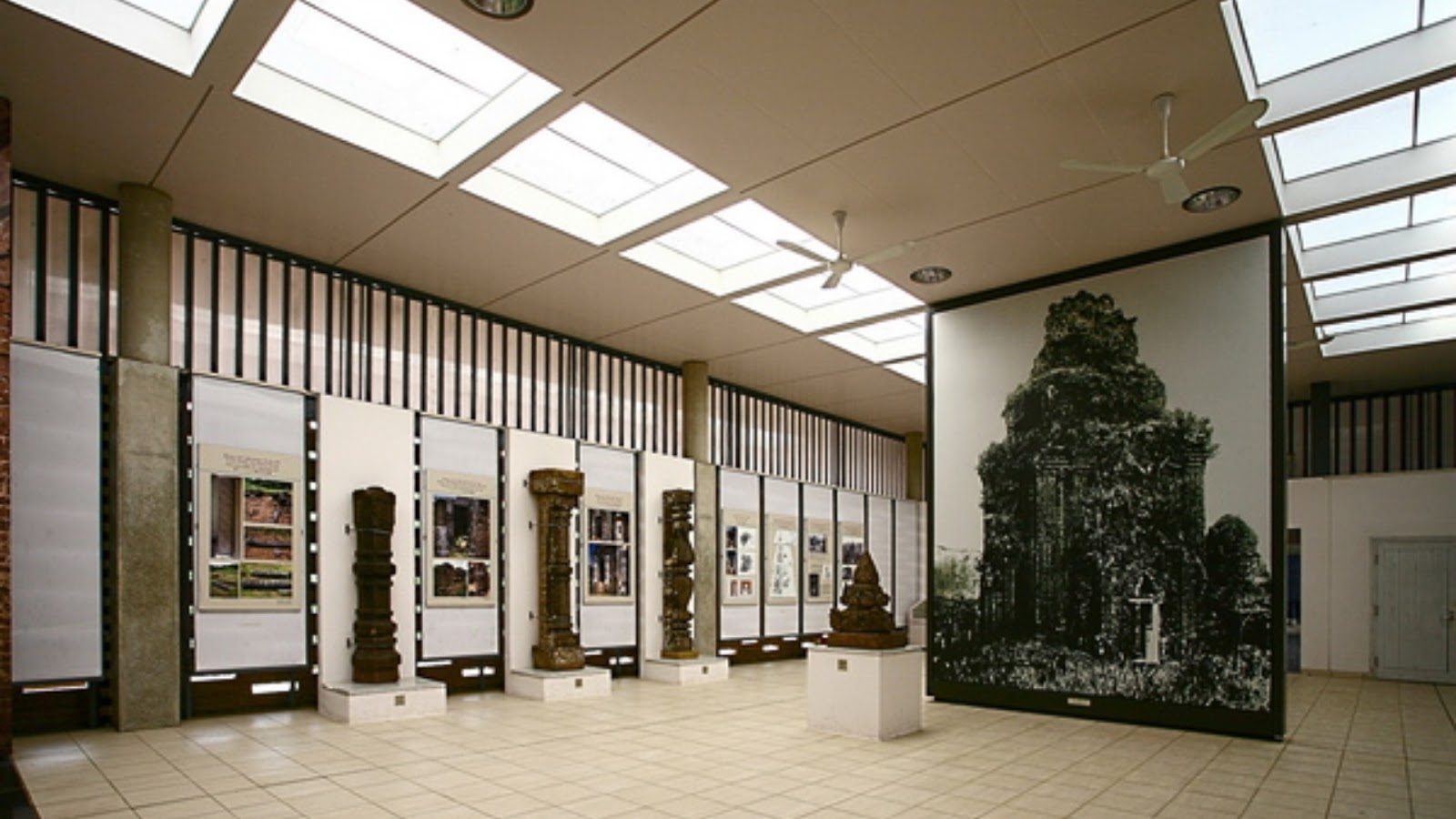
The Mỹ Sơn site is well-marked with designated hiking trails, making it possible to visit without a guide. However, for a deeper understanding, we strongly recommend visiting the museum located at the entrance to the complex first. It will help you identify and understand the rich symbolism and Hindu mythology of the temples. An on-site guide will also provide you with personalized and valuable insights into this unique site.
The Fascinating History of Mỹ Sơn
Construction of the Mỹ Sơn sanctuary began in the late 4th century. This architectural complex, consisting of temples dedicated to Shiva, served as the religious and political capital of the Kingdom of Champa. This kingdom, also known as Champa, flourished in what is now central Vietnam, near Hội An, from the 6th to the 15th century, and even into the early 19th century within a smaller territory. Cham culture developed through contact with Indian and Chinese civilizations, which dominated maritime trade in Southeast Asia, as well as with its Vietnamese neighbors to the north and the Khmer to the west.
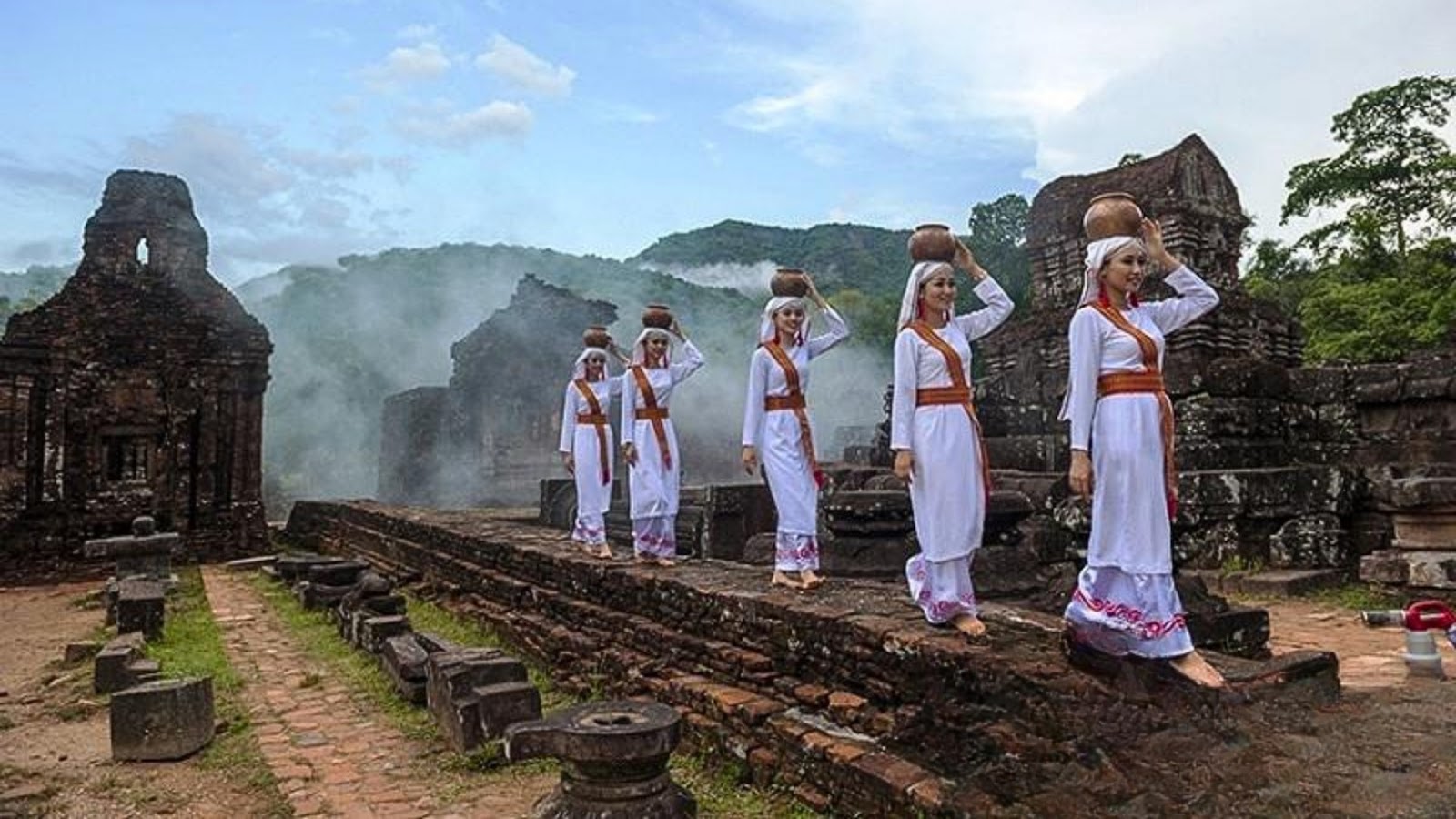
In the 4th century, Mỹ Sơn became the religious center of the Cham kingdom, serving as the seat of the royal family, the aristocracy, and major religious ceremonies. For nine centuries, Mỹ Sơn played a preeminent role in Cham religious culture. The first wooden temple, built in the 4th century to worship the deity Shiva Bhadravarman, was destroyed by fire in the 6th century. Subsequently, the Cham kings continued to erect new temples and towers to honor the celestial deities.
At the end of the 13th century, the Kingdom of Champa, under attack from neighboring countries, was forced to move its capital south to Bình Thuận Province. Forgotten for hundreds of years, the Mỹ Sơn region was rediscovered in 1898 by a French scholar, thus revealing this treasure to the world.
Today, Mỹ Sơn stands as a poignant testament to the glorious, prosperous periods and the decline of the Champa Kingdom. It is considered the most famous Hindu temple complex in Southeast Asia and a unique monument of this r
The Mysterious Architecture of Mỹ Sơn
According to many French, Polish, and Vietnamese researchers, the architecture of the Mỹ Sơn sanctuary is a fascinating blend of Arab, Malaysian, Indonesian, and, above all, Indian influences. This monument combines various styles, such as the ancient style of the 7th and 8th centuries, the 8th-century Hoa Lai style, the 9th-century Đồng Dương style, and the Mỹ Sơn-Bình Định style.
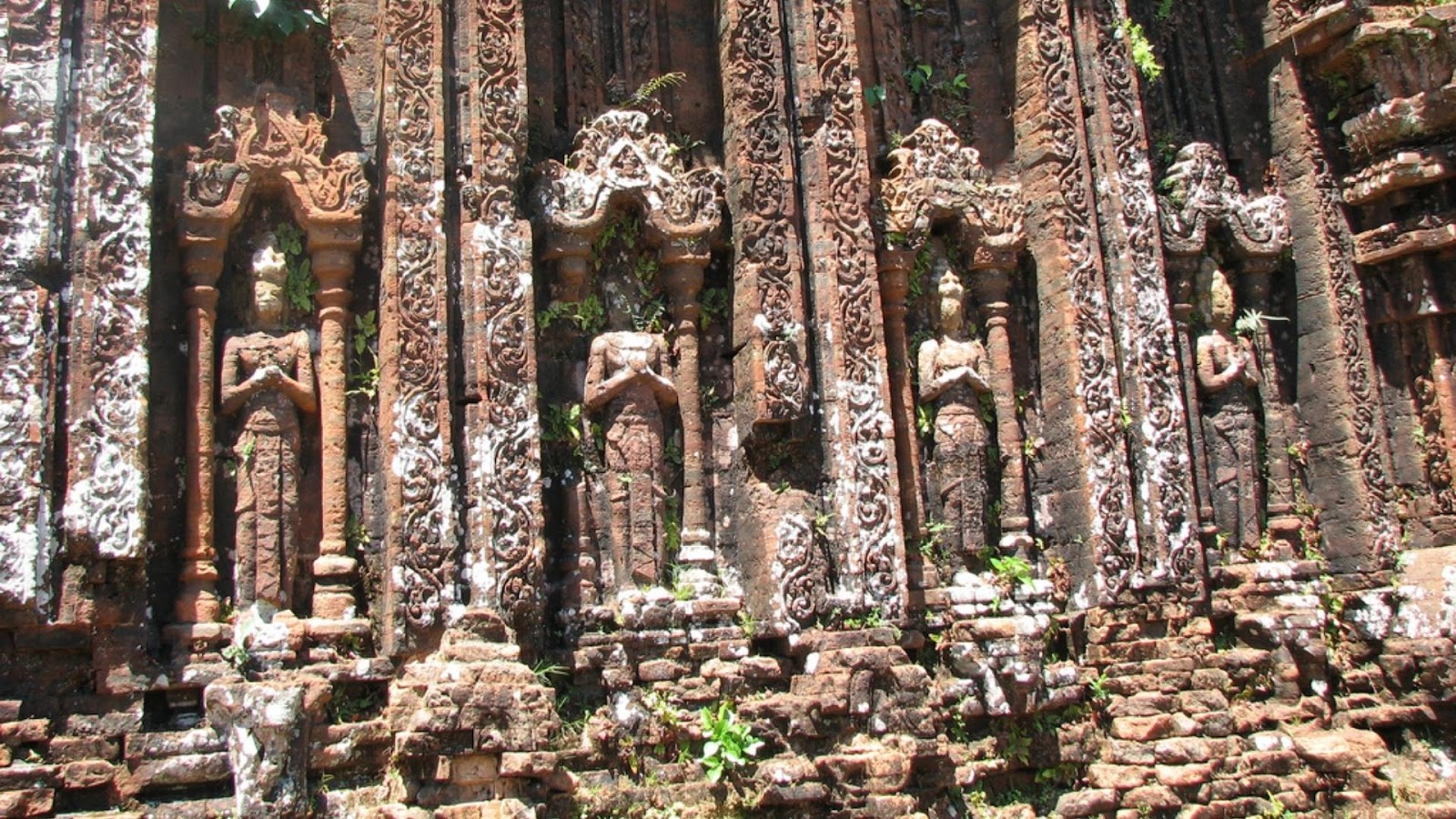
This unique accumulation of varied construction techniques makes this complex an archaeological site where scientists still have many questions. To this day, the brick-making and construction techniques used in the past remain a mystery to contemporary archaeologists.
The architectural designs of the temples symbolize the grandeur and purity of Mount Meru, a symbol of religion in Vietnam, as well as the unique culture and arts of the ancient Champa Kingdom at its peak. The buildings are constructed of fired brick with stone pillars and adorned with sandstone bas-reliefs depicting scenes from Hindu mythology. The Mỹ Sơn Sanctuary is a remarkable architectural complex that offers a vivid picture of spiritual and political life during an important phase of Southeast Asian history.
Because of these invaluable qualities, Mỹ Sơn was honored with the designation of World Cultural Heritage Site in 1999, attracting millions of tourists each year.
Conservation Efforts
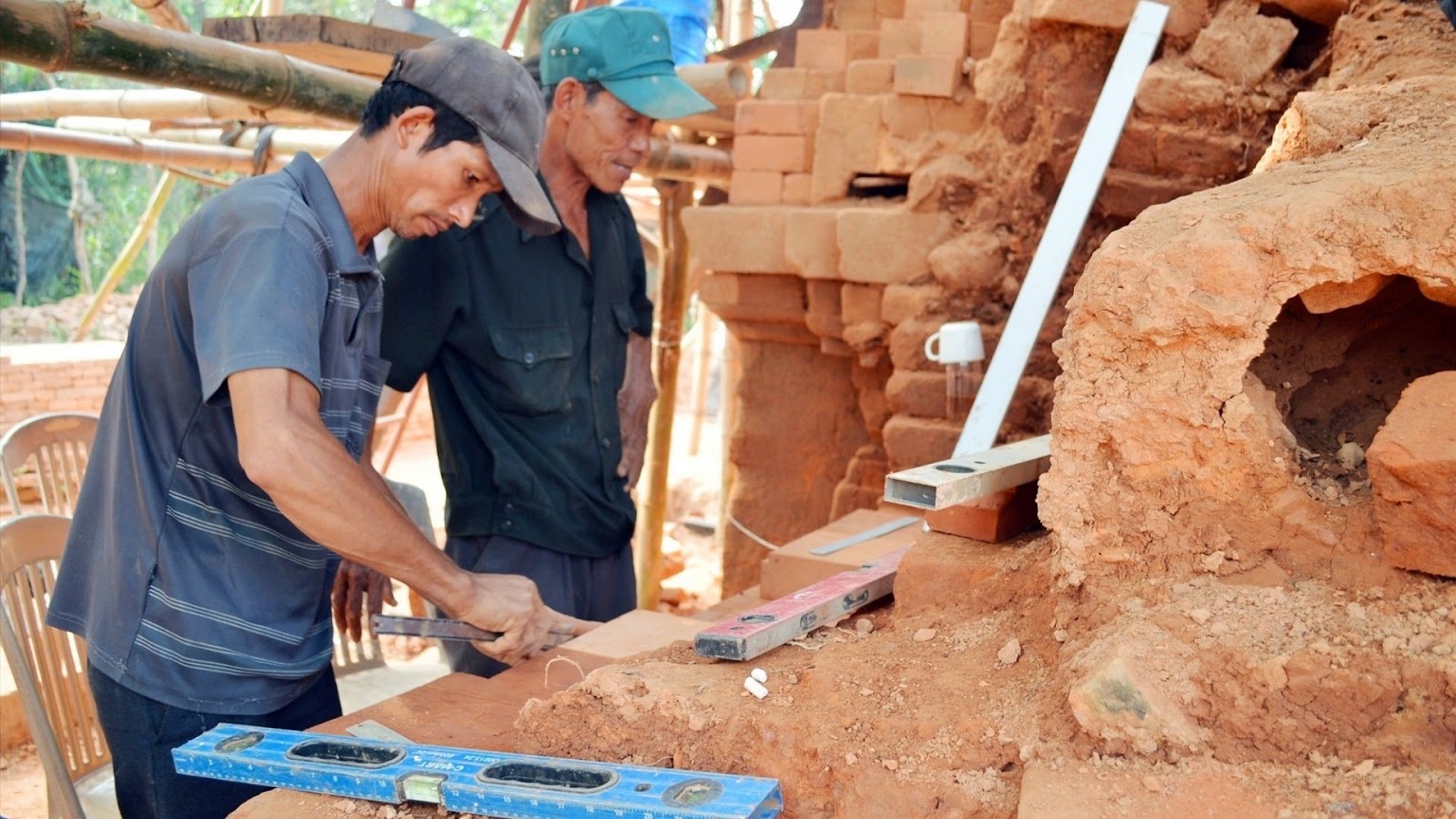
Conservation efforts for the Mỹ Sơn monuments began in the early 20th century, following their discovery by French archaeologists. Unfortunately, many temples were damaged during World War II, the First Indochina War, and especially during the Second Indochina War. Despite this, extensive conservation efforts have been carried out, and the temples are now well maintained. However, the site remains threatened by extreme weather conditions, such as flooding and high humidity.
Conclusion
The preserved beauty and rich history of Mỹ Sơn will likely continue to fascinate people for decades to come. Be sure to plan your transportation in advance, sample the local Vietnamese cuisine, and book suitable accommodations nearby for your return trip.
As a site of culture and wonder for over ten centuries, Mỹ Sơn has stood the test of time, braving the elements and conflicts, to tell the story of a Vietnam long past. If you’re looking for an essential cultural experience in Vietnam.