Why HA NOI?
Hanoi is a must-see destination during your visit to Vietnam, combining history, culture, and unique cuisine. You’ll discover historical sites, taste famous dishes like pho and bun cha, and immerse yourself in the city’s vibrant rhythm. The friendliness and hospitality of the locals will offer you an unforgettable experience.
Hanoi – The Millennial Heart of Vietnam
The capital of Vietnam, Hanoi, is much more than just a political, cultural, and historical center: it is the guardian of the essence of a millennia-old civilization. This city offers a unique fusion of ancestral oriental elegance, the charm of French colonial architecture, and a modern pace of life that nevertheless retains its gentleness and poetry.
The culinary experience in Hanoi is absolutely unmissable. From the traditional Pho Bo, through the flavorful grilled Bun Cha, to the unique Egg Coffee (Ca Phe Trung), each dish tells a story. A delicate and profound story, reflecting the character of the city’s inhabitants.
MORE INFORMATION

Nearest Airport

Best Time to Visit
Hanoi is beautiful all year round; each season possesses a unique and captivating beauty.

Types of tour
All circuits

Suggested Itinerary
The second day after your arrival in Vietnam
The District of 36 Corporations
The Vibrant Beauty of Old Hanoi
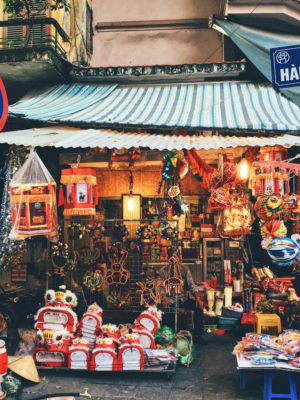
Discover the Old Quarter, over a thousand years old, where each street once bore the name of its craft specialty: Hàng Bạc (silver), Hàng Gai (silk), Hàng Đào (fabrics)… As you stroll through its narrow alleyways, you will explore a Hanoi that is both ancient and vibrant, with its hidden cafes, its tube houses with French architecture, its street vendors on bicycles and the scent of Phở floating in the air from dawn.
Suggested experiments:
Absolutely try Phở Bò, Bún Chả and Bánh Cuốn.
Enjoy an Egg Coffee (Cà Phê Trứng) at Café Giảng, the most renowned establishment in Hanoi for this unique drink.
Purchase local handcrafted souvenirs (ceramics, silk, lacquer)
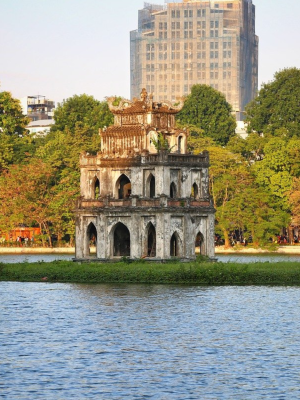
Hoan Kiem Lake and Turtle Tower
Symbols of Serenity in the Heart of the Capital
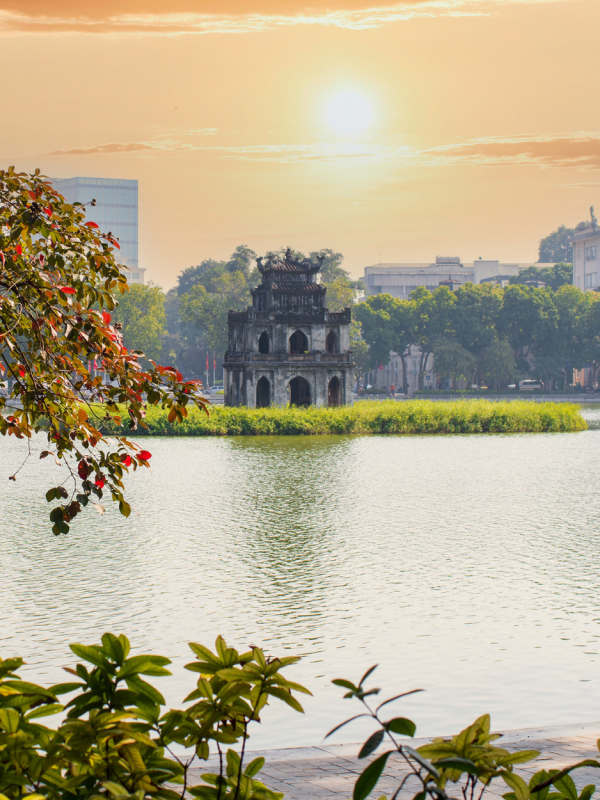
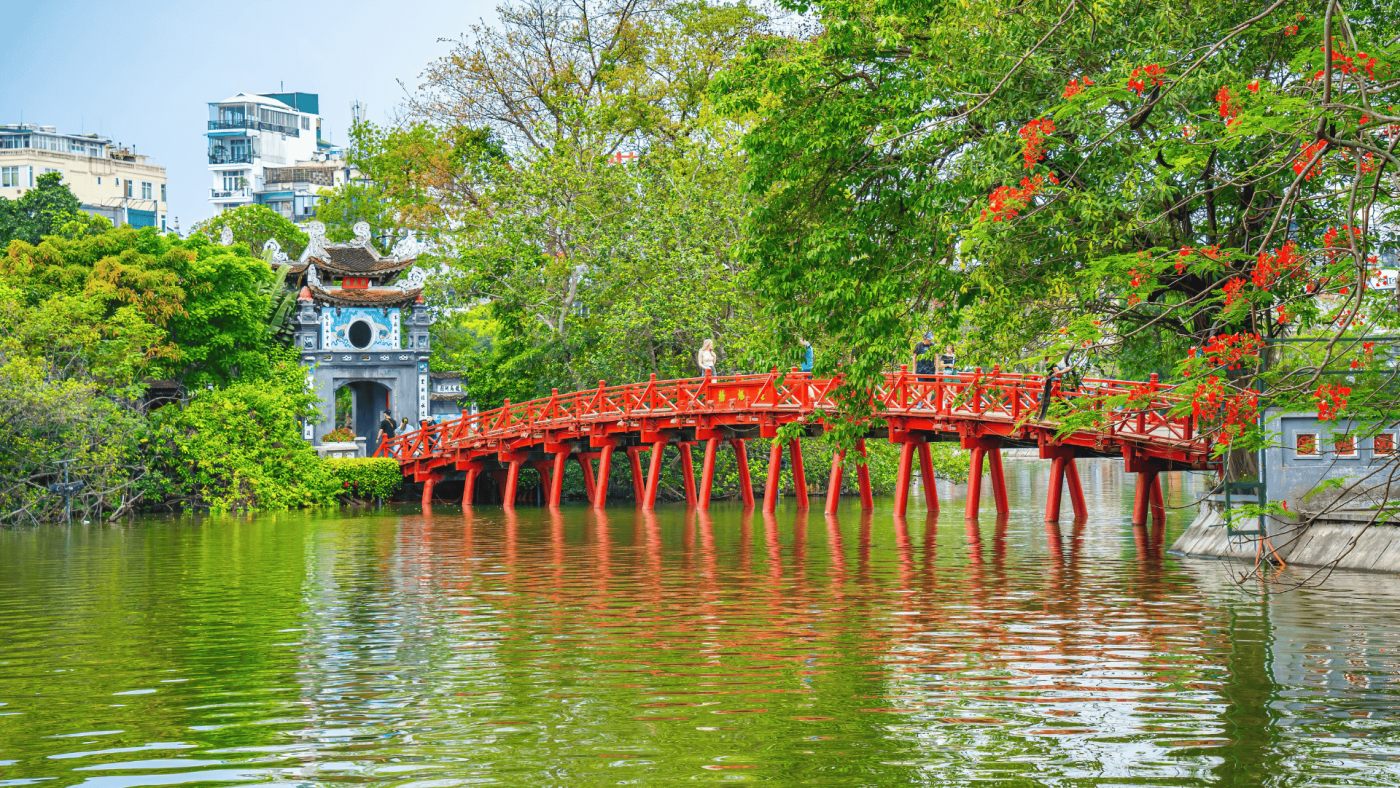
Amidst the city’s frenetic pace, Hoàn Kiếm Lake offers a haven of tranquility and poetry. The Turtle Tower (Tháp Rùa), erected in the middle of the lake, is inextricably linked to the legend of the “Magic Turtle Returning the Sword.” Spanning the lake, the vibrant red Thê Húc Bridge leads to the sacred Ngoc Sơn Temple, dedicated to cultural heroes.
Suggested experiments:
Take a peaceful walk around the lake early in the morning.
Capture the beauty of the Thê Húc Bridge at sunset.
Participate in Tai Chi or traditional dance sessions with the locals.
Temple of Literature
The Temple of Literature – Vietnam’s First University
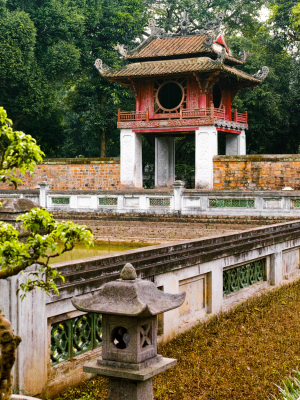
Erected in 1070, the Temple of Literature (Văn Miếu – Quốc Tử Giám) is Vietnam’s first university, an iconic place where talents were trained during the feudal era. Its grounds, comprising several courtyards, a tranquil lake, and the Pavilion of the Constellation of Literature (Khuê Văn Các), offer a harmonious and symbolically rich oriental architecture.
Suggested experiments:
Have your name written in Hán calligraphy – a unique spiritual gift.
Explore the Doctors’ Stelae (bia Tiến sĩ) engraved with the names of the winners of the imperial examinations since the 15th century.
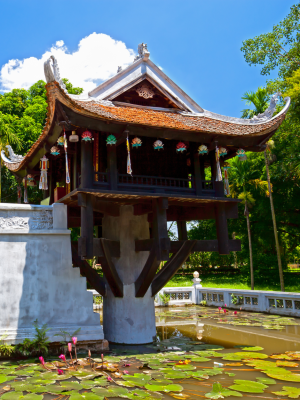
Single Pillar Pagoda
One Pillar Pagoda – A Buddhist Architectural Masterpiece
Built in 1049, the One Pillar Pagoda (Chùa Một Cột) features a unique design, evoking a blooming lotus flower resting on a single stone column in the middle of a basin. It is recognized as one of the most singular religious structures in Asia.
Suggested experiments:
Take a moment to pray for peace according to Buddhist traditions.
Photograph this iconic symbol, which can be found on many Vietnamese postcards and banknotes.
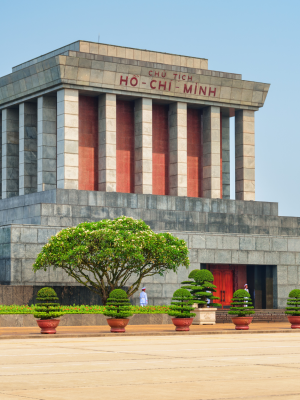
Ho Chi Minh Mausoleum
Ho Chi Minh Mausoleum – The Final Resting Place of the Great Leader
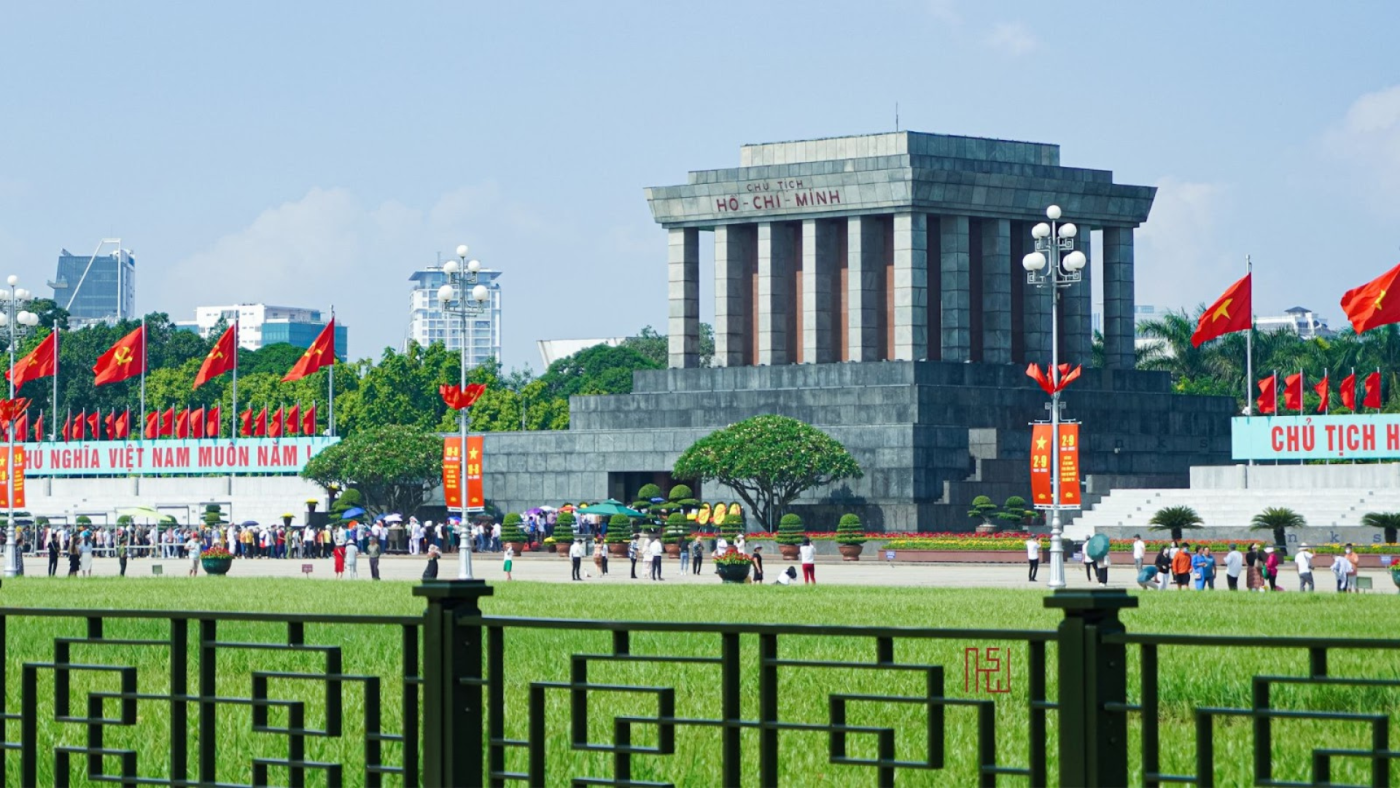
It is a place of solemn remembrance, housing the remains of President Ho Chi Minh, the leader who led Vietnam to independence. Nearby are the Presidential Palace, Uncle Ho’s Stilt House (his simple and humble residence), and the Ho Chi Minh Museum, which retraces the key stages of his life.
Note:
Appropriate attire is required, and filming or photography is prohibited inside the mausoleum.
Opening hours: early morning from 7:30 am to 10:30 am (closed on Mondays).
The Hanoi Opera House
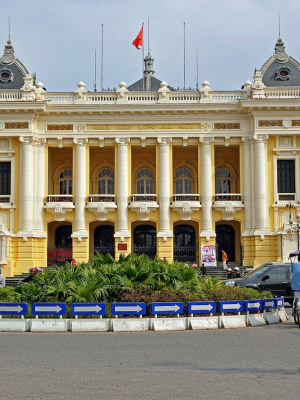
The Hanoi Opera House – A French Architectural Masterpiece
Built between 1901 and 1911 in the Beaux-Arts style, the Hanoi Opera House is a majestic replica of the Opéra Garnier in Paris. Today, it is the largest performing arts center in the capital, hosting programs of classical music, ballets, and notably traditional water puppet shows.
Suggested experiments:
Book tickets to attend a folk performance or a symphony concert.
Capture this corner of “ancient Paris” in Hanoi by taking photos in front of the theatre.
Dong Xuan Market
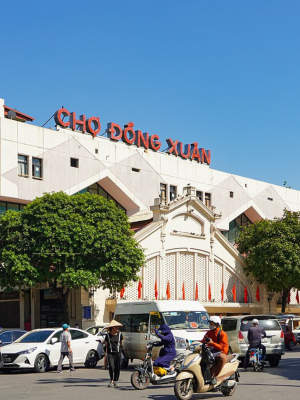
The Dong Xuan Market – The Historic Commercial Heart of Hanoi
Discover Đồng Xuân Market, the largest market in Hanoi, which has been in operation since the 19th century. It’s a veritable labyrinth where you can find everything: clothes, fabrics, souvenirs and of course, a multitude of traditional culinary specialties.
Suggested experiments:
Enjoy Bún Riêu (crab noodle soup) and Bánh Tôm (prawn fritters) in the market’s food court.
Find unique souvenirs, imbued with the richness of Vietnamese culture.
Train Street Cafe
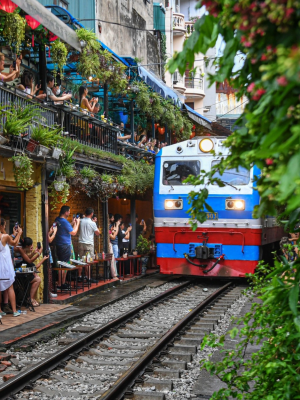
The Hanoi Railway – A Unique Experience in the World
Discover an absolutely fascinating spectacle in Hanoi: a railway line that literally cuts through a residential neighborhood. Here, the train skims the facades of cafes and houses, passing just steps away from passersby. A thrilling and poetic experience that has become extremely popular on social media.
Please note for your visit:
For security reasons, access to this area requires being accompanied by a local.
Trains run at fixed times, usually early in the morning and late in the afternoon.
Museum of Fine Arts and Museum of Ethnology
A Window on the Cultural Richness of Vietnam
Immerse yourself in the depths of Vietnamese culture through its iconic museums.
The Vietnam Fine Arts Museum (Bảo tàng Mỹ thuật) houses a fascinating collection of lacquerware, antique sculptures and folk art, offering a panorama of the country’s artistic expression through the ages.
Suggested experiments:
Attend a miniature water puppet show (múa rối nước) in the courtyard of the Museum of Ethnology.
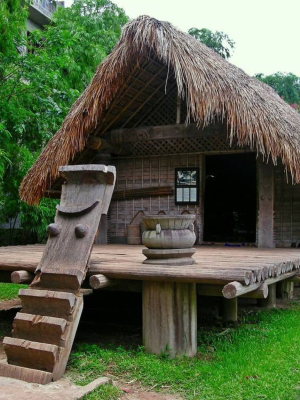
Immortalize your visit by taking photos in traditional houses like the Rông house or the Gươl house.